
Guides
DTG vs Screen Printing for Custom Photo Shirts
Nov
Updated November 2, 2026
DTG printing vs screen printing comes down to detail and quantity. DTG prints a full-color image straight onto the fabric with no setup, so it suits photos and single shirts. Screen printing uses a separate stencil for every color, which pays off on big runs of simple designs. For one personalized photo shirt, a digital method wins.
If you’ve ever asked a print shop for one shirt with a family photo on it and been told about a minimum order, you’ve already met the difference between these two methods. Neither is “better” across the board. They’re built for different jobs, and knowing which job you have saves money and disappointment.
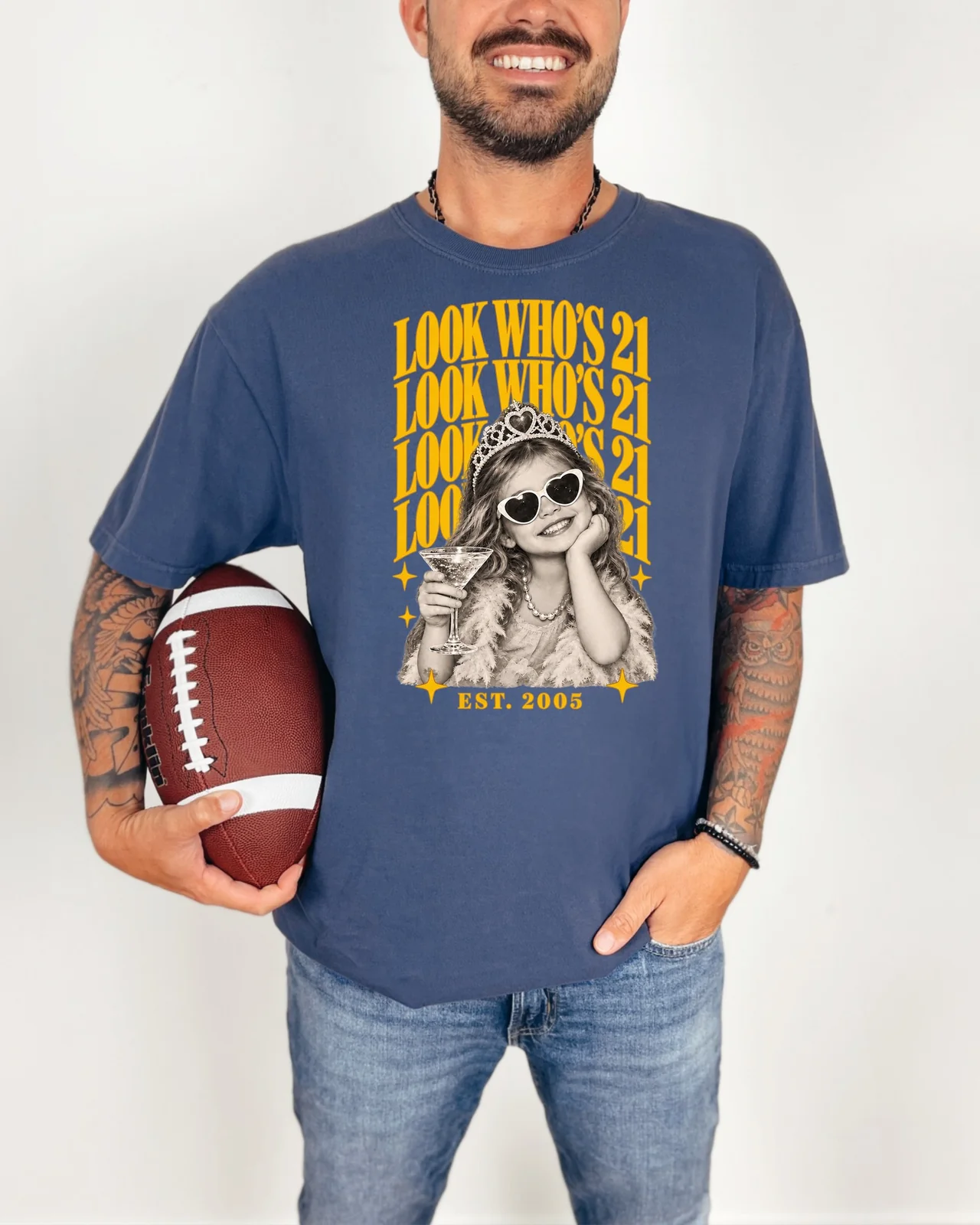
How are custom shirts printed?
Most custom apparel today comes from one of three methods. Direct-to-garment (DTG) and direct-to-film (DTF) are digital: a computer sends the image to a printer, so changing the design between shirts costs nothing extra. Screen printing is analog: each color in the design gets its own physical screen, set up by hand before the first shirt is printed.
You’ll also run into heat transfer vinyl, which is cut from colored sheets and works best for simple text and shapes, and sublimation, which dyes polyester fabric and doesn’t suit cotton. For photo shirts on cotton, the real contest is between the first three.
What is DTG printing?
Think of DTG as an inkjet printer built for shirts. The garment is laid flat on a platen, and print heads spray water-based ink directly into the fabric. On darker shirts, the printer usually lays down a white underbase first so the colors on top stay bright. The ink is then heat-cured so it sets into the fibers.
- No screens or setup, so a single shirt is practical.
- Handles full-color images, gradients and fine detail, which is exactly what photos need.
- Ink goes into the fabric rather than sitting in a thick layer on top, so the print area tends to feel soft.
- Works best on high-cotton garments.
The tradeoff is cost at scale. Because every shirt is printed individually at the same speed, DTG doesn’t get much cheaper per shirt when you order hundreds.
What is screen printing?
Screen printing is the method behind most concert merch, team uniforms and company event shirts. A fine mesh screen is coated with a light-sensitive emulsion, and the design is burned into it to create a stencil. Ink gets pushed through the open areas with a squeegee, one color and one screen at a time, and the shirt is then cured with heat.
- Very efficient once set up: the hundredth shirt prints as fast as the second.
- Thick, opaque, saturated color, especially for bold graphics and solid shapes.
- A long track record on large production runs.
- Every color needs its own screen, so setup time and cost add up quickly.
- Most shops set minimum quantities for that reason.
- Photos are possible but tricky; they have to be broken into halftone dots across several screens.
- A different name or photo on each shirt would mean new screens for every shirt.
Where does DTF printing fit in?
DTF is the newer digital option. Instead of printing onto the shirt, the printer prints the design onto a special film, adds a layer of adhesive powder, and cures it. The finished transfer is then heat-pressed onto the garment. Like DTG, it needs no screens, handles full color, and makes one-off shirts easy. It also works on a wider range of fabrics, and the print sits on the surface of the shirt as a thin, flexible layer.
In practice, DTG and DTF are both good answers for personalized photo apparel. Which one a printer picks often depends on the garment and the design.
DTG printing vs screen printing: how do they compare?
| DTG | Screen printing | DTF | |
|---|---|---|---|
| Setup per design | None | One screen per color | None |
| Minimum order | Usually none | Common at most shops | Usually none |
| Full-color photos | Strong | Possible with halftones, harder | Strong |
| Different design on every shirt | Easy | Impractical | Easy |
| Where the ink sits | In the fibers | Layer on top of the fabric | Thin film bonded to the surface |
| Cost per shirt at high volume | Stays fairly flat | Drops as quantity rises | Stays fairly flat |
| Best for | Photos, one-offs, small batches | Big runs of the same simple design | Photos, one-offs, mixed fabrics |
Which method gives the best photo print quality?
For a single photo shirt, digital printing has the edge. DTG and DTF reproduce skin tones, soft shadows and gradients directly from the image file. A screen printer can produce a photo too, but it takes several screens, careful halftone work and a skilled operator, and that effort only makes sense when you’re printing the same picture many times.
That said, the method is only half of photo print quality. The other half is the photo you start with. A blurry or dark picture will look blurry or dark no matter how good the printer is. A clear, well-lit, front-facing shot with the whole face in the frame makes a bigger difference than any equipment choice. Our photo guidelines show what to look for, and the guide to putting a picture on a shirt covers quick fixes for common problems.
How does OutfitBlend print your shirt?
Every shirt we sell is personalized, which means no two orders are the same. One order might carry three photos of someone’s kids for a mom shirt; the next might be a wedding photo for an anniversary shirt. Screen printing would need new screens for every single order, so it isn’t the right tool.
Instead, we print each shirt individually with DTF or DTG, depending on the garment. That’s why there’s no minimum order: one shirt is a normal order for us. Designs go on Comfort Colors garments (the 1717 tee, 1566 crewneck, 1567 hoodie and 9018 youth tee), and all of it is printed stateside before shipping from the USA. Production takes 1 to 3 business days before your shirt heads out by USPS.
When is screen printing the smarter pick?
If you need 150 identical shirts for a 5K, a company picnic or a youth league, with a one- or two-color design and no names, a screen printer is very likely your best value. The setup cost gets spread across a lot of shirts, and the per-shirt price drops as the count goes up.
The moment each shirt needs its own name, face or photo, the math flips. That’s where a digital method like the one we use makes far more sense.
Who it’s for: which method fits your order?
- Buying one photo shirt as a gift for a partner, parent or best friend: digital printing, since there’s no minimum and the photo keeps its detail.
- Ordering a shirt with your own face or your pet for yourself: digital again, one at a time.
- Planning a bachelorette, reunion or birthday trip where every shirt shows the same photo: digital handles small groups without setup fees.
- Parents ordering team shirts where each kid gets their own name and number: digital, because every shirt is different.
- Coaches or HR teams needing 100+ identical one-color shirts with a simple logo you own: a local screen printer is the better call.
How long does a printed shirt last?
Every method can hold up well when it’s done properly and cared for, and every method can wear out faster if the shirt is washed hot and dried on high heat. We don’t put a number on it, because the honest answer depends on the garment, the wash routine and how often the shirt is worn. Gentle care makes the biggest difference. Our guide on how to wash a custom printed shirt walks through the routine we recommend.
Printing FAQ
Is DTG better than screen printing for photos?
For one shirt or a small batch, usually yes. DTG reproduces full-color images and gradients without any setup. Screen printing can print photos using halftones, but it needs multiple screens and only makes financial sense for large runs of the same image.
Why do screen printers have minimum orders?
Each color in a design needs its own screen, and setting up those screens takes time and materials. Spreading that setup cost across many shirts is what makes screen printing affordable, so most shops require a minimum.
What’s the difference between DTG and DTF?
DTG prints ink directly onto the shirt. DTF prints the design onto a film, which is then heat-pressed onto the shirt. Both are digital, both handle full color, and both make single personalized shirts practical.
How are OutfitBlend shirts printed?
We print each shirt one at a time with DTF or DTG, depending on the garment, on Comfort Colors blanks. Printing happens in the USA, orders ship from here, and there’s no minimum.
Can screen printing do a different name on each shirt?
Not efficiently. Changing the design means new screens, so personalized names or photos on every shirt are better suited to digital methods like DTG or DTF.
One shirt, your photo, no minimum
Choose a design and upload your picture. We handle the printing, one shirt at a time.
